
 Image 1 of 5
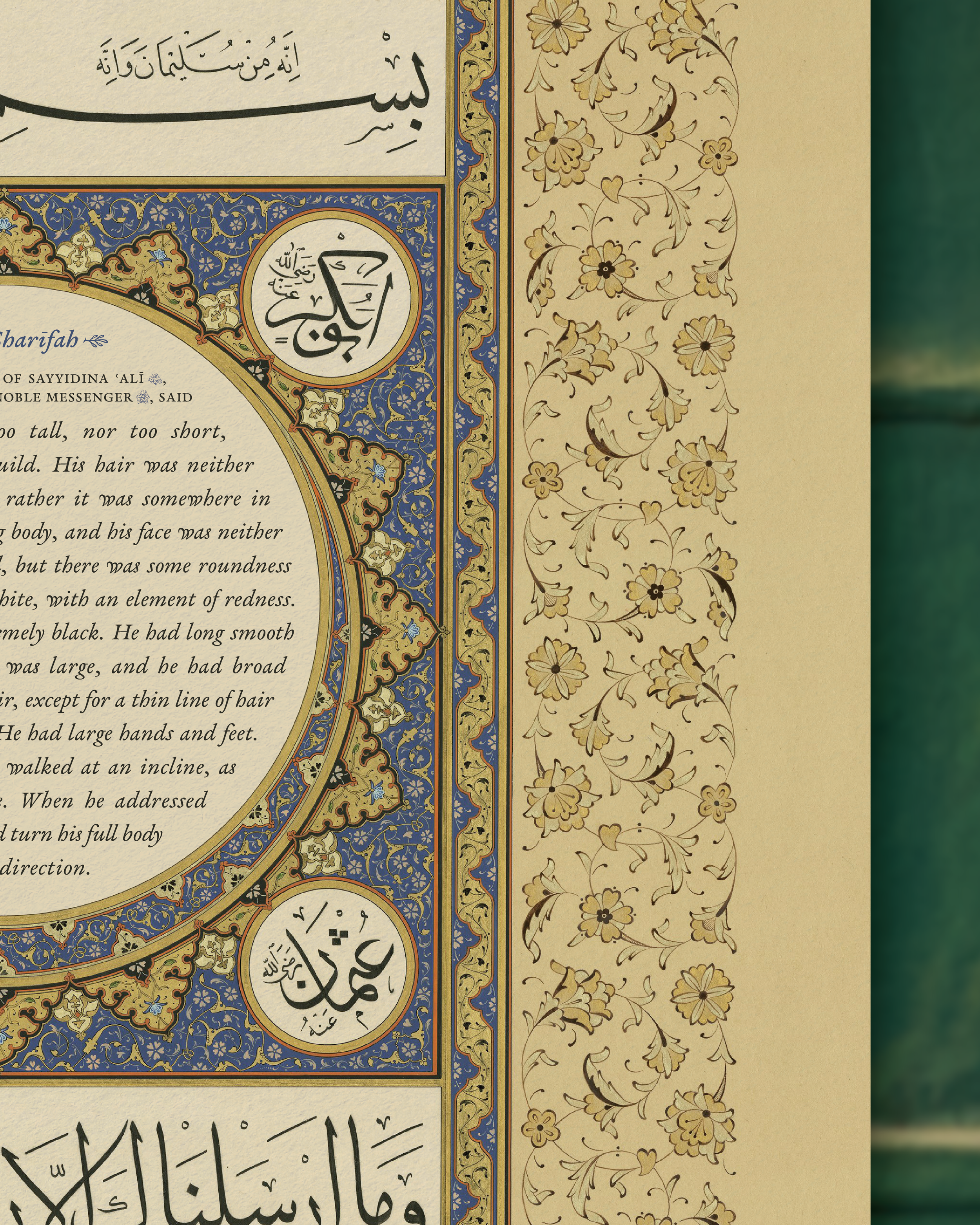 Image 2 of 5
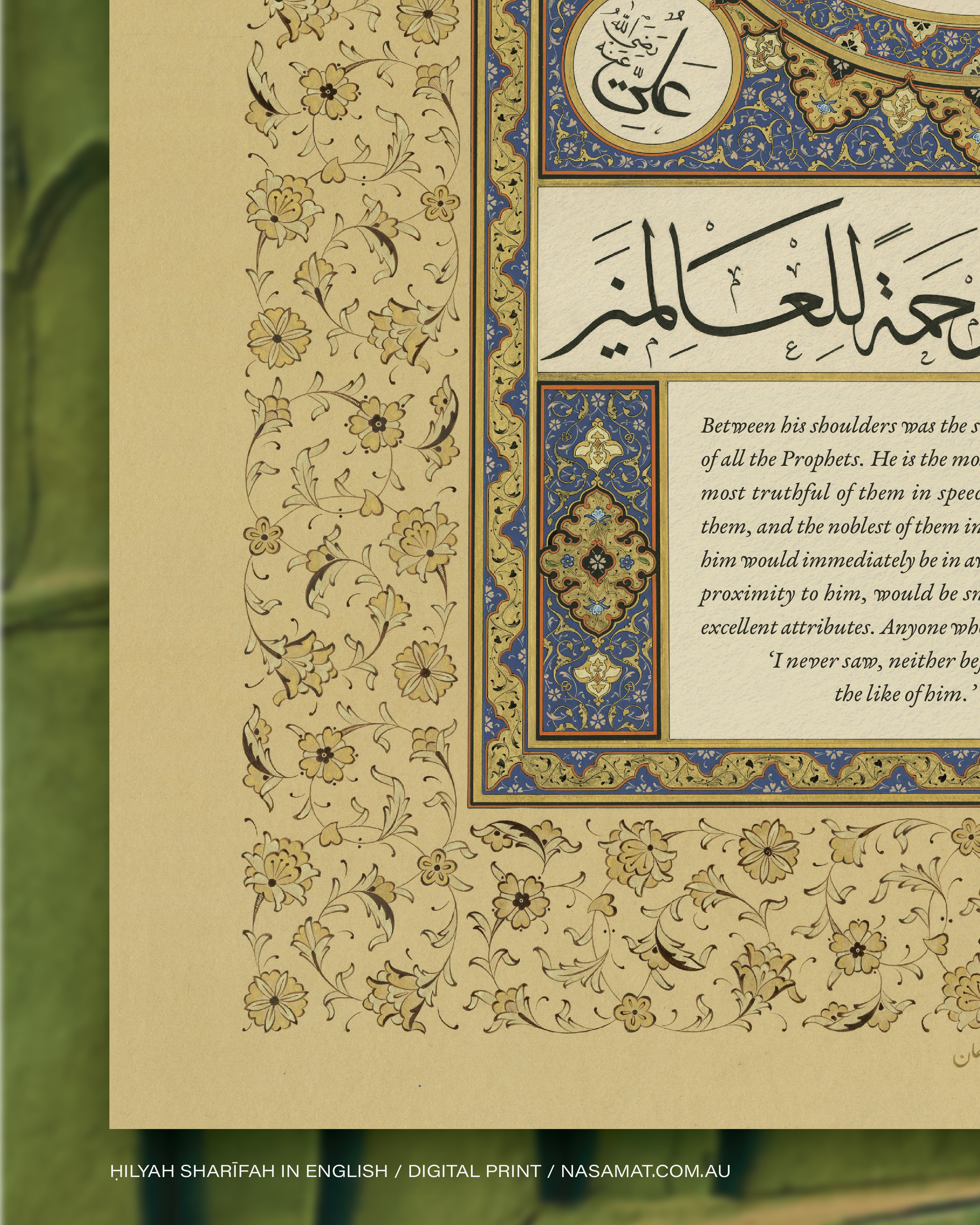 Image 3 of 5
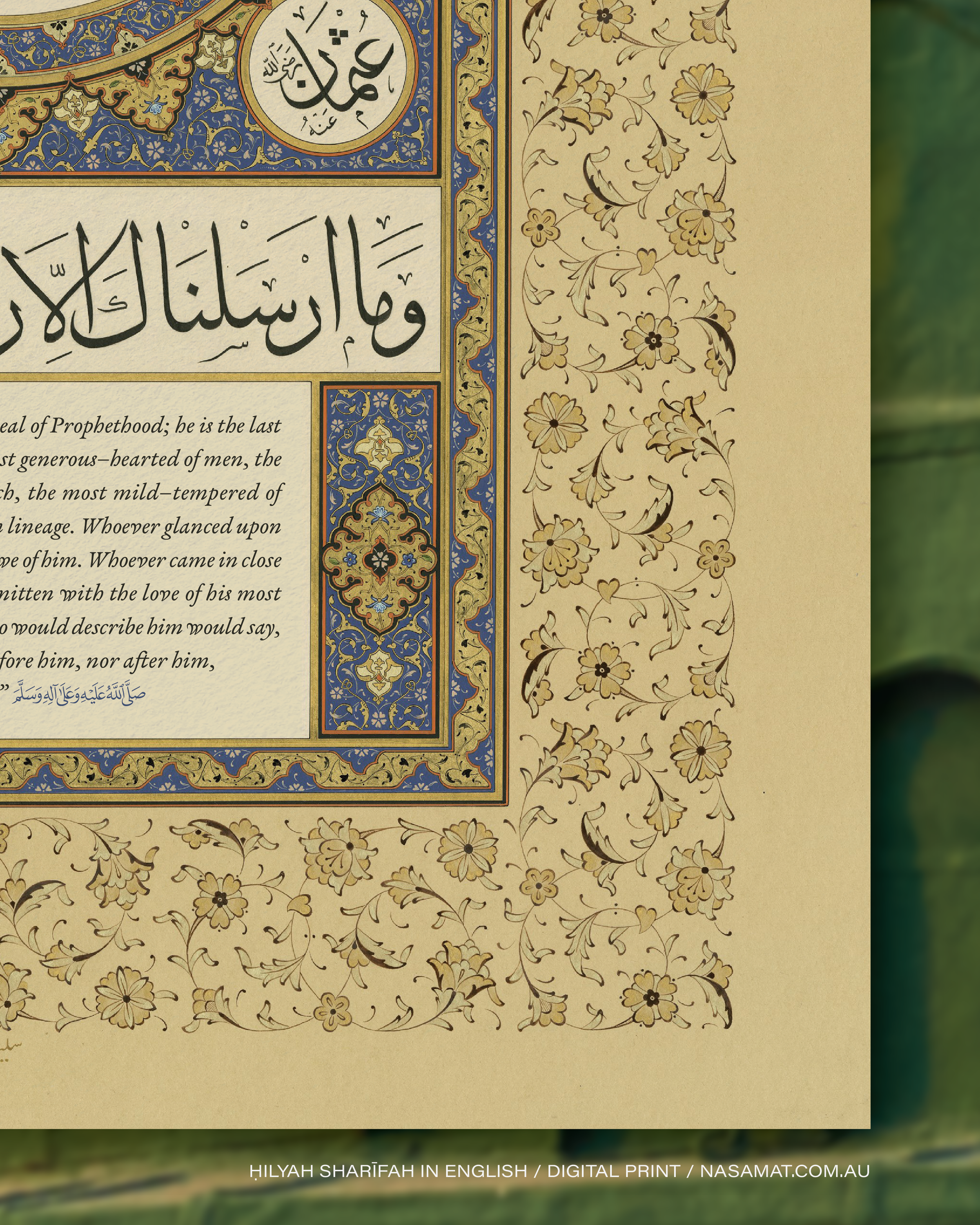 Image 4 of 5
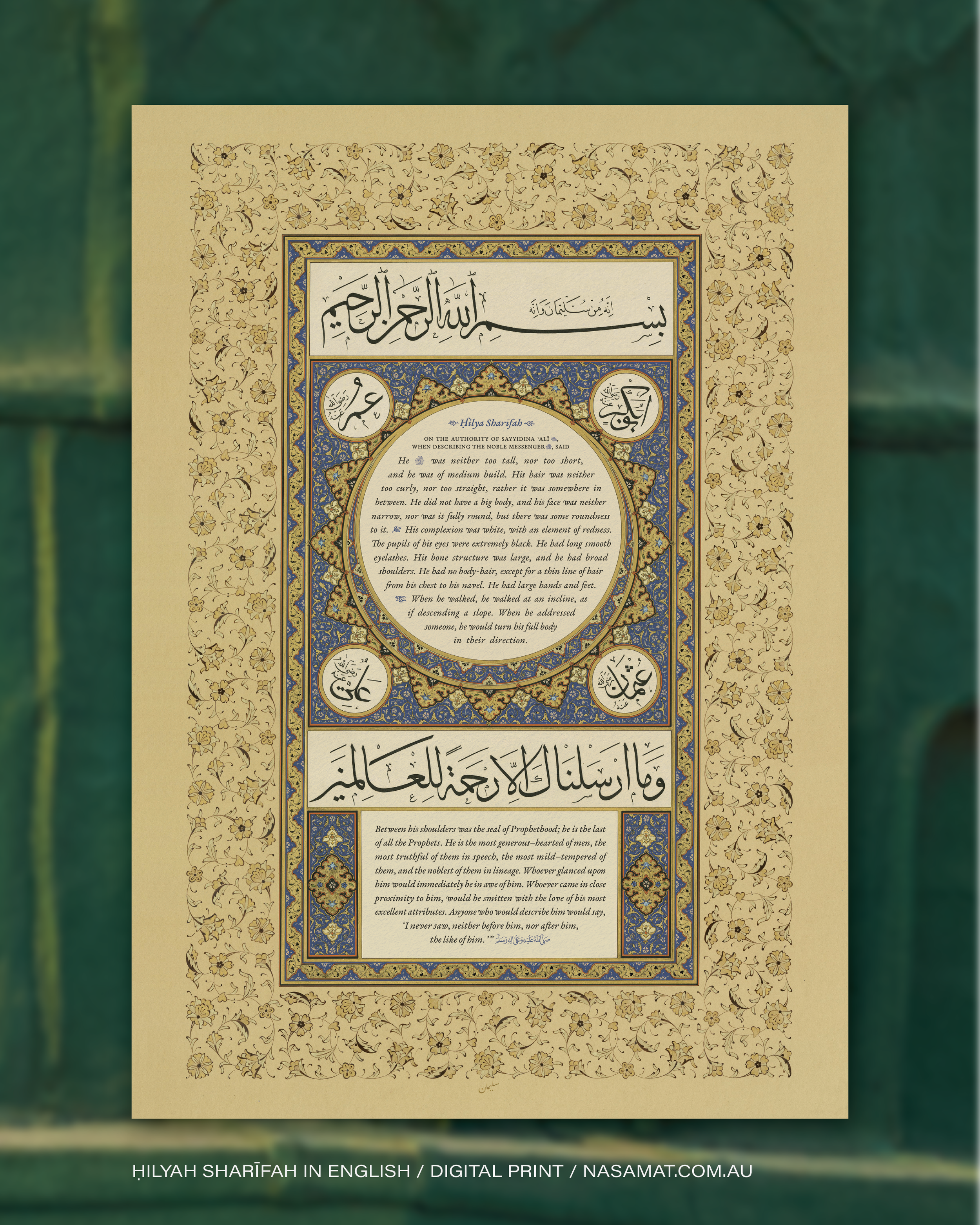 Image 5 of 5
The tradition of creating Hilyas dates back to the early centuries of Islam, when Muslims sought various ways to express their love and admiration for the Prophet Muhammad. The practice gained prominence during the Ottoman Empire, especially in the 17th century, when the Ottomans developed a unique style of Hilya as an art form.
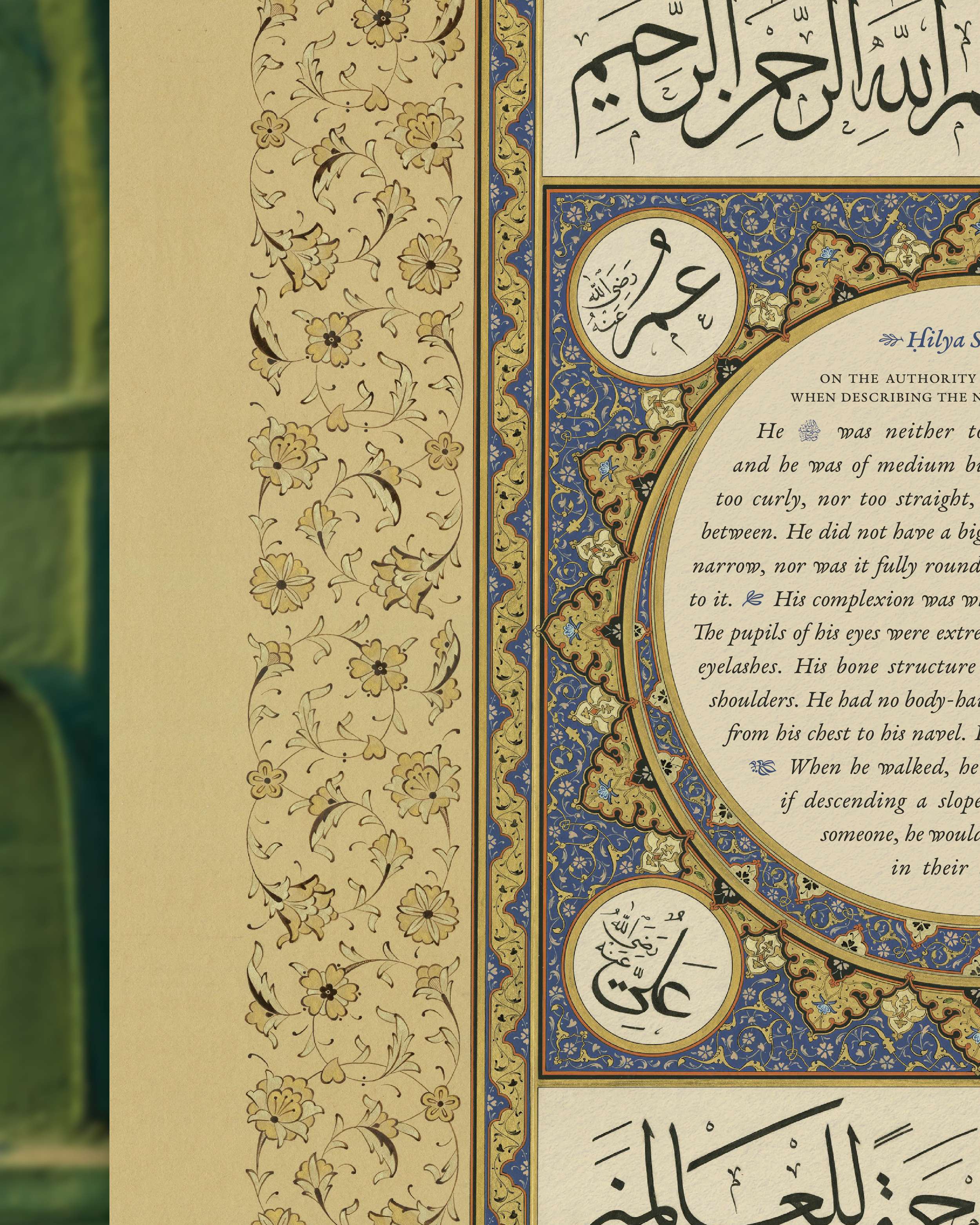
This artwork presents the description of Rasulullah ﷺ as an expression of reverence and love. The text contained is a report included in Imam al-Tirmidhi’s al-Shamaail al-Muhammadiyyah, narrated by Sayyidina Ali ibn Abi Talib.
English: ‘He was neither excessively tall, nor short, but rather was of a medium stature among (his) people. His hair was neither extremely curly nor straight, but rather wavy and flowing. He was neither corpulent nor was his face completely circular, but it was slightly rounded. (His complexion) was fair with some redness. His eyes were very black, his eyelashes were long. His joints were large and his shoulders broad. He was smooth-skinned; a thin line of hair ran from his chest to his navel. His hands and feet were full-fleshed and sturdy. He walked with vigour, as though descending from a height. When he turned to look (at someone or something), he would turn with his whole person.
Between his shoulders was the Seal of Prophethood, and he is the Seal of the Prophets. His heart was the soundest and most generous of hearts. His speech is the most truthful of speech. He was the gentlest of people and the kindest of them in companionship. Whoever saw him unexpectedly would be awe-stricken. Whoever came to know him would love him. Whoever described him would say, “I saw neither before him nor after him anyone like him’
PDF download includes a custom English artwork to be hung in homes
Print at standard A4, A3 sizes. Bleed/crop marked file available upon request.
The tradition of creating Hilyas dates back to the early centuries of Islam, when Muslims sought various ways to express their love and admiration for the Prophet Muhammad. The practice gained prominence during the Ottoman Empire, especially in the 17th century, when the Ottomans developed a unique style of Hilya as an art form.
This artwork presents the description of Rasulullah ﷺ as an expression of reverence and love. The text contained is a report included in Imam al-Tirmidhi’s al-Shamaail al-Muhammadiyyah, narrated by Sayyidina Ali ibn Abi Talib.
English: ‘He was neither excessively tall, nor short, but rather was of a medium stature among (his) people. His hair was neither extremely curly nor straight, but rather wavy and flowing. He was neither corpulent nor was his face completely circular, but it was slightly rounded. (His complexion) was fair with some redness. His eyes were very black, his eyelashes were long. His joints were large and his shoulders broad. He was smooth-skinned; a thin line of hair ran from his chest to his navel. His hands and feet were full-fleshed and sturdy. He walked with vigour, as though descending from a height. When he turned to look (at someone or something), he would turn with his whole person.
Between his shoulders was the Seal of Prophethood, and he is the Seal of the Prophets. His heart was the soundest and most generous of hearts. His speech is the most truthful of speech. He was the gentlest of people and the kindest of them in companionship. Whoever saw him unexpectedly would be awe-stricken. Whoever came to know him would love him. Whoever described him would say, “I saw neither before him nor after him anyone like him’
PDF download includes a custom English artwork to be hung in homes
Print at standard A4, A3 sizes. Bleed/crop marked file available upon request.